Şanzelize Boutique where Kemal and Füsun reunite
The Museum of InnocenceŞanzelize Boutique where Kemal and Füsun reunite is the Nişantaşı shop where Kemal Basmacı encounters Füsun again while buying a handbag that will expose the distance between its appearance and its value. Its dark interior, window display, and small bell frame the beginning of a story in which a commercial errand becomes an intimate turning point. Later, the closed shop remains fixed in Kemal’s private map of Istanbul: at once a place he must avoid and a sign that draws his memories back to Füsun.
Setting and Social World
The boutique stood near the crossing of Teşvikiye Avenue and Valikonağı Avenue, in a district associated with affluent Istanbul life. Its name transliterated the famous Parisian avenue, and its merchandise belonged to a local trade in imported and copied fashion. Kemal describes boutiques of the period as businesses run by bored, Westernized housewives who brought trinkets and clothing back from Paris and Milan in their luggage, or sold copies of fashions seen in imported magazines. The goods carried more than practical use: their prices and foreign associations made them tokens of aspiration and social distinction.
The shop’s later proprietor, Şenay Hanım, was a distant relation of both Kemal and Füsun on Kemal’s mother’s side. Years afterward, she gave the narrator the sign that had once hung on the door, along with other objects connected to Füsun, without questioning his interest. Her response suggests that the boutique’s part in the story was not wholly private; some of its unusual details had circulated more widely than Kemal had supposed. The shop had since closed, but its sign survived as a material trace of the place.
The Handbag and the Reunion
The chain leading to the shop began on April 27, 1975. After supper at Fuaye Restaurant, where the families discussed preparations for Kemal and Sibel Hanım’s approaching engagement party, Kemal walked Sibel home. She noticed a handbag in a shop window. He remembered its name and the shop, then returned at noon the following day to buy it for her.
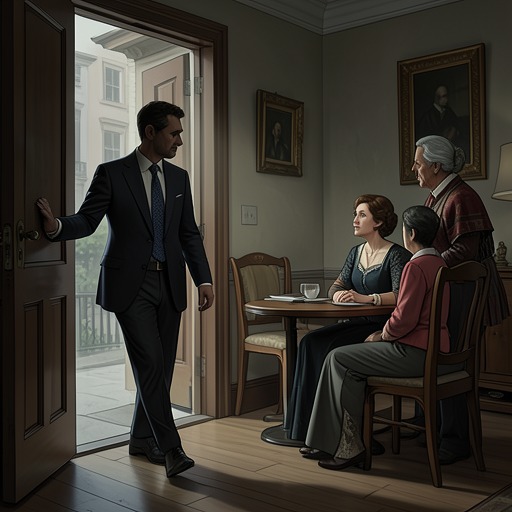
The boutique’s entrance made the visit unforgettable to him. A small bronze, double-knobbed camel bell rang two notes; the shop was cool and dim after the noon sunlight, and at first he could not see anyone inside. Then he recognized Füsun. She worked there and had seen him immediately, though she had waited to speak because he had not recognized her. Their reunion took place not in a family home or at a formal gathering, but across a counter during a sale.
Füsun demonstrated the bag with deliberate care, taking tissue paper from its compartments and showing Kemal the pockets and the card inside. Her movements made an ordinary examination of merchandise feel private and charged. The display window, counter, and bag thus became the setting and objects through which the two relatives confronted their changed familiarity: Kemal arrived intending to purchase a present and found himself unsettled by the woman presenting it.
The gift later failed its intended purpose. Sibel Hanım recognized that the handbag was an imitation by inspecting the stitching on its label and comparing it with a genuine Jenny Colon handbag she had bought in Paris. She said she could not carry it to the engagement party. Her correction turned Kemal’s hopeful present into a source of embarrassment, while exposing the social weight attached to authenticity, foreign brands, and the ability to distinguish them.
Repeated Visits and Avoidance
The shop recurs as Kemal’s longing becomes bound to routine. On a later visit he entered carrying the same plastic bag. The interior was again gloomy; Lemon the canary sang while Füsun, partly hidden by a screen and a large vase of cyclamens, attended to a customer in the fitting room. The scene repeats the first visit’s dimness and delay, but now Kemal is not simply making a purchase: his attention is fixed on whether Füsun will receive him.
During another search for her, Kemal went to the boutique after she failed to arrive for a meeting at the Merhamet Apartments. He told Şenay Hanım that he and Sibel Hanım had decided he should buy the Jenny Colon handbag after all. The shopkeeper’s brief hint of mockery gave way to silence; she retrieved the bag from the mannequin and dusted it with a shopkeeper’s practiced care. Kemal directed his attention to Lemon. The gesture leaves the transaction suspended between commerce and shared discomfort: both buyer and seller are conscious of the imitation and of the reason the purchase has returned.
As Kemal tried to preserve his ordinary life while suppressing his attachment to Füsun, the boutique became one of the places he prohibited himself from approaching. His modified mental map marked it red, together with the Merhamet Apartments and streets associated with Füsun. He had already found ways around earlier resolutions—for example, by setting out to buy Sibel Hanım flowers near the shop—so the map imposed stricter boundaries. Even streets marked for necessary passage carried rules about sobriety, speed, and not lingering. The boutique therefore changed from a place of encounter into a forbidden point in a city organized by the effort to control recollection.
The Shop in Kemal’s Remembered City
Avoidance could not make the place disappear. Kemal’s map also held routes and locations associated with the imagined appearances of Füsun’s ghost; as these sightings multiplied, Istanbul became a network of signs that recalled her. The boutique belonged to that remembered geography alongside the streets he restricted and the places he sought out while searching for her. Its significance lies partly in this transformation: a specific shop could be both a physical address and a stimulus that reorganized how he moved through the city.
The contrast becomes sharper when Kemal later meets Füsun in Beyoğlu after their renewed relationship and her decision to divorce Feridun. They choose cinemas, sit in dim theaters, and hold hands in the back rows. Those meetings offer shared time rather than the uncertainty of a shop counter, but they retain the earlier story’s attention to interiors, objects, and small gestures. In retrospect, the boutique’s first reunion anticipates a narrative in which ordinary places acquire emotional force through repeated looking and remembering.
The surviving shop sign also connects the setting to the novel’s wider interest in material traces. Kemal’s later account presents everyday objects as witnesses to the life he shared with Füsun and as a way for visitors to understand that life. The boutique itself is not merely a backdrop to the handbag’s purchase: its sign, bell, display, and remembered rooms locate the beginning of an attachment in the material world of Istanbul commerce. The place’s final form is double: the shop is closed, yet it remains active in Kemal’s memory as the scene where seeing Füsun again unsettled the future he had planned.